
A New Approach to Healthy Skin Aging: Understanding Senescent Cells

Healthy skin is about so much more than what we see on the surface. As we age, changes take place deep within our skin that influence its ability to repair, renew, and maintain its strength and resilience.
One of the more exciting new areas of skincare research involves something called cellular senescence.
What Are Senescent Cells?
As our skin ages, some cells stop dividing but don't die or get cleared away as they normally would. These are called senescent cells, sometimes referred to as "zombie cells."
While cellular senescence is a natural process and can actually serve important protective functions, problems can arise when too many of these cells accumulate.
Rather than simply remaining inactive, some senescent cells release inflammatory signals that can negatively affect the surrounding healthy cells. Over time, this can contribute to chronic low-grade inflammation, collagen breakdown, loss of elasticity, thinning skin, uneven pigmentation, and a reduced ability to recover from everyday stress.
Introducing Marie Veronique's Senolytic Serum and Balm
Marie Veronique has introduced two new formulations designed to address cellular senescence and support healthier skin function as we age.
Both products contain fisetin, a naturally occurring plant compound being studied for its potential ability to selectively target certain senescent cells. The two formulations are designed to work in different ways.
Senolytic Serum
This lightweight serum contains encapsulated fisetin, along with astragalus root and a stable form of vitamin C.
The formulation is designed to support fibroblasts, the cells responsible for producing collagen and elastin, and to help maintain the structural integrity of the skin. Its focus is on supporting firmness, elasticity, resilience, and the skin's ability to respond to age-related stress.
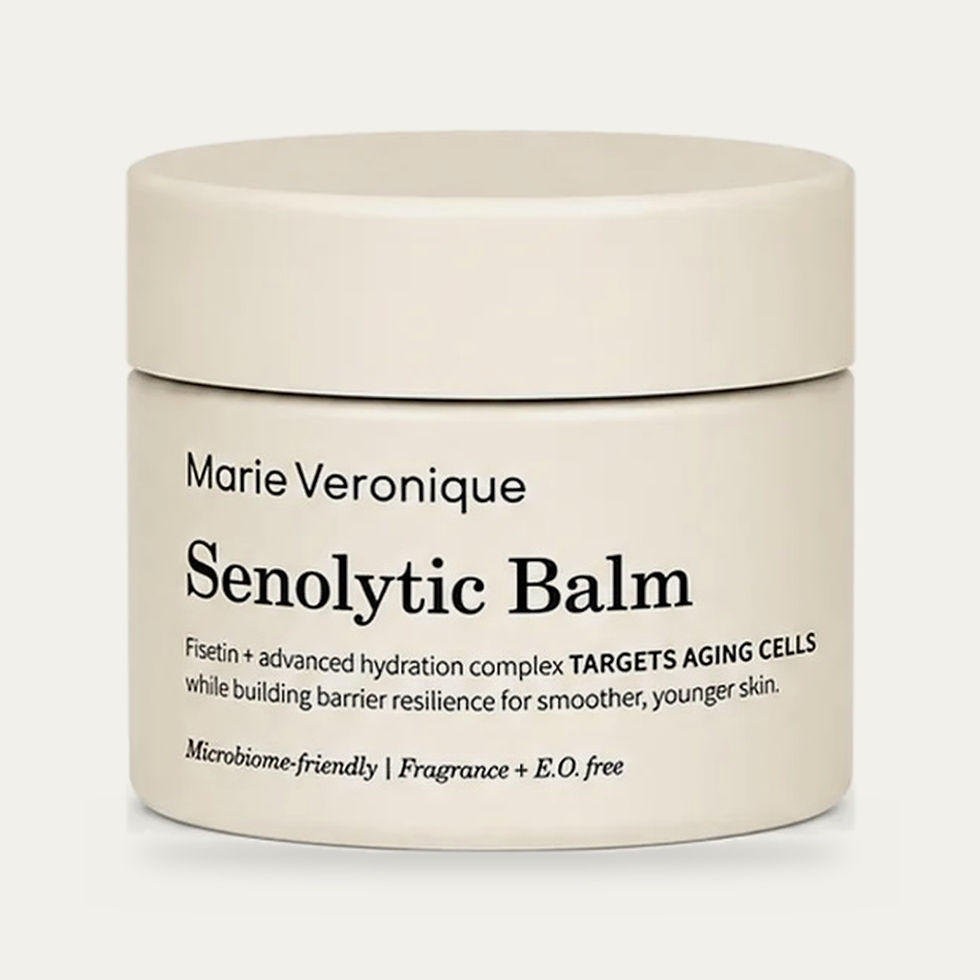
Senolytic Balm
The balm takes a more nourishing approach, combining fisetin with resveratrol, CoQ10, vitamin C, and barrier-supportive lipids.
It is particularly well suited to skin experiencing dryness, thinning, or a compromised moisture barrier. In addition to its cellular longevity focus, the balm helps replenish lipids, reduce moisture loss, and support a stronger, more resilient skin barrier.
Why This Approach Interests Me
What excites me about these new formulations is the shift toward understanding aging at a cellular level. This new area of research considers cellular health, inflammation, structural support, and barrier function together.
Healthy aging isn't simply about stimulating collagen or encouraging faster cell turnover. It's also about reducing inflammation, protecting the skin barrier, and supporting the environment in which our skin cells function.


Comments